
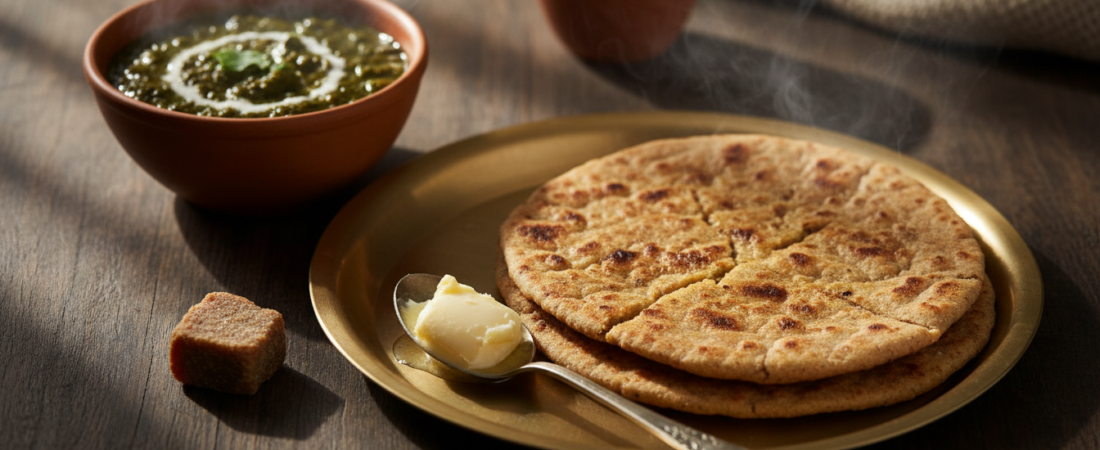
As soon as the first cold mornings arrive in North India, bajra comes back to the kitchen. Bajra roti with ghee and jaggery, bajra khichdi, bajra laddoo: for generations, families have treated pearl millet as the grain of winter. If you have wondered why, this guide explains the benefits of bajra in winter and gives you easy ways to eat it, even if you are tired of rotis.
What is bajra (pearl millet)?
Bajra, or pearl millet, is one of India’s oldest cultivated grains. It grows well in dry, hot regions such as Rajasthan, Uttar Pradesh, Haryana and Gujarat, needs very little water, and is naturally gluten-free. It sits alongside ragi (finger millet) and jowar (sorghum) in the group of grains often called nutri-cereals.
Why bajra is a winter favourite
- It is traditionally seen as a warming food. In Indian food traditions, bajra is eaten more in cold months, usually with ghee, jaggery, sesame or garlic chutney.
- It is rich in fibre. Fibre keeps you feeling full for longer, which helps when winter makes everyone want to snack all day.
- It contains useful minerals. Bajra provides iron, magnesium and other minerals as part of a varied diet.
- It is gluten-free. That makes it a popular choice for people who avoid wheat.
Bajra is a nourishing food, not a medicine. It works best as part of a balanced diet. If you have a thyroid condition or any medical concern, ask your doctor how much millet suits you.
5 easy ways to eat bajra this winter
1. Bajra roti with ghee and jaggery
The classic. Make the dough with warm water, roll it thick and cook on a hot tawa. Serve with a spoon of ghee and a piece of jaggery or white butter.
2. Bajra khichdi
Cook bajra with moong dal, a little ghee, cumin and winter vegetables like carrot and peas. It is warm, filling and easy to digest for most people.
3. Bajra and sesame laddoo
Roast bajra flour in ghee, then mix with jaggery and roasted sesame. These laddoos keep for days and make a good winter snack for children and adults.
4. Roasted bajra as a crunchy snack
If cooking every day is difficult, roasted bajra is the easiest option. Eat it plain, add it to a salad, or toss it with chopped onion, tomato, lemon and chaat masala for a quick evening snack. Read more in Roasted Millets: The Simplest Snack We Make.
5. Bajra cookies
For children who refuse to eat millet at meals, a small cookie is an easy start. Our Bajra Cookies are made without maida. They contain butter and raw sugar, so keep to a small serving.
Bajra vs ragi vs jowar: which should you choose?
You do not have to pick only one. Each millet has a different taste and texture, and rotating them keeps meals interesting. We explain the differences in Ragi, Jowar and Bajra: What Each Millet Brings to Your Plate.
Frequently asked questions
Is bajra good to eat every day in winter?
Many families eat bajra several times a week in winter. A varied diet is best, so mix it with other grains and vegetables.
Can children eat bajra?
Yes. Children can enjoy bajra in rotis, khichdi and cookies. Start with small portions and see what they like.
Is bajra gluten-free?
Bajra is naturally gluten-free. If you have celiac disease, check that the product you buy is made and packed without cross-contamination.
Try bajra snacks from Komalika
Komalika Farmer Producer Company brings bajra, jowar and ragi from farmer fields to your home as cookies and roasted millets. See our millet products or message us on WhatsApp to order.